








Nearly one in five Premier League goals this season have come from corners.
The actual figure of 18% is the highest proportion in a decade and a 6% jump on last season.
Several reasons seem to have contributed to this jump – the types of players recruited, the role of set-piece analysts and the less strict officiating – meaning corners have skewed in the favour of attacking sides.
To understand the trends and tactics teams are increasingly using this season, there is no better case study to analyse than Arsenal‘s opener against Chelsea in their 2-1 Premier League win earlier this month.
Predicting defensive set-ups key to corner success
Given that set-plays are predictable, teams have the ability to prepare specific routines built around exploiting how the defending side typically set up.
On rare occasions, the opposition may deploy a unique defensive tactic from corners and catch the attacking side off-guard, making their preparation ineffective.
A good example of this was in the Carabao Cup semi-final second leg between Arsenal and Chelsea in February. Liam Rosenior’s men pushed three players up to the halfway line when defending a corner.
Arsenal as a result dropped players back, failing to find their usual success from corners.
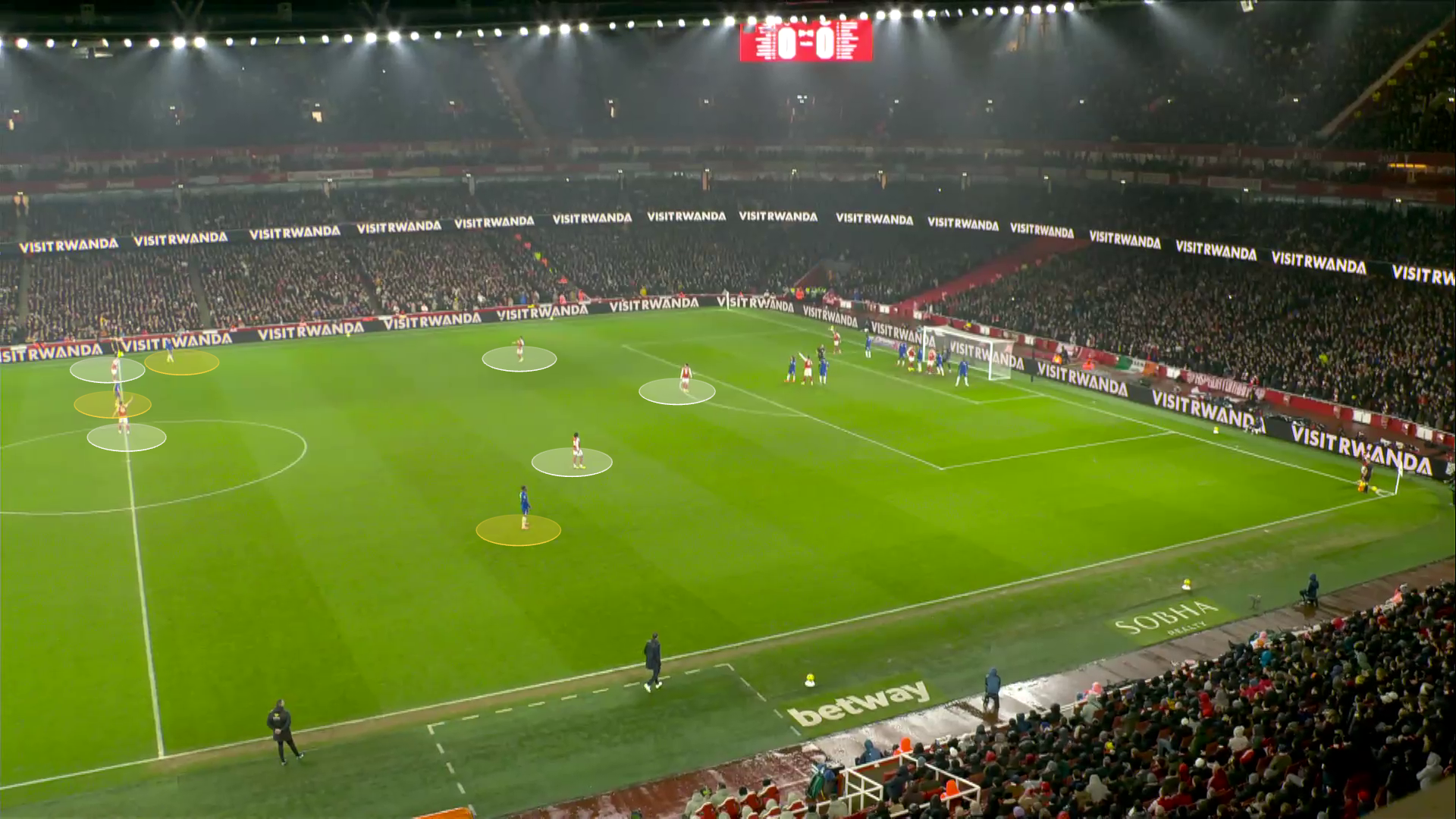
In their recent Premier League meeting though, Arsenal placed three players at the edge of the box, working on a routine that did not require all nine outfielders (excluding the corner taker).
If Chelsea were to push three players up again, Arsenal‘s routine would have still worked as the three players on the edge of the box would have tracked back.
In the game however, Chelsea did not push players up.
Arsenal‘s six players closer to goal were able to execute their routine and score with the three players behind them uninvolved.
What this highlights is the ever-changing nature of set-piece routines with attacking sides reacting to defensive tweaks week on week and vice versa.

Recognising zonal and man-marking set-ups
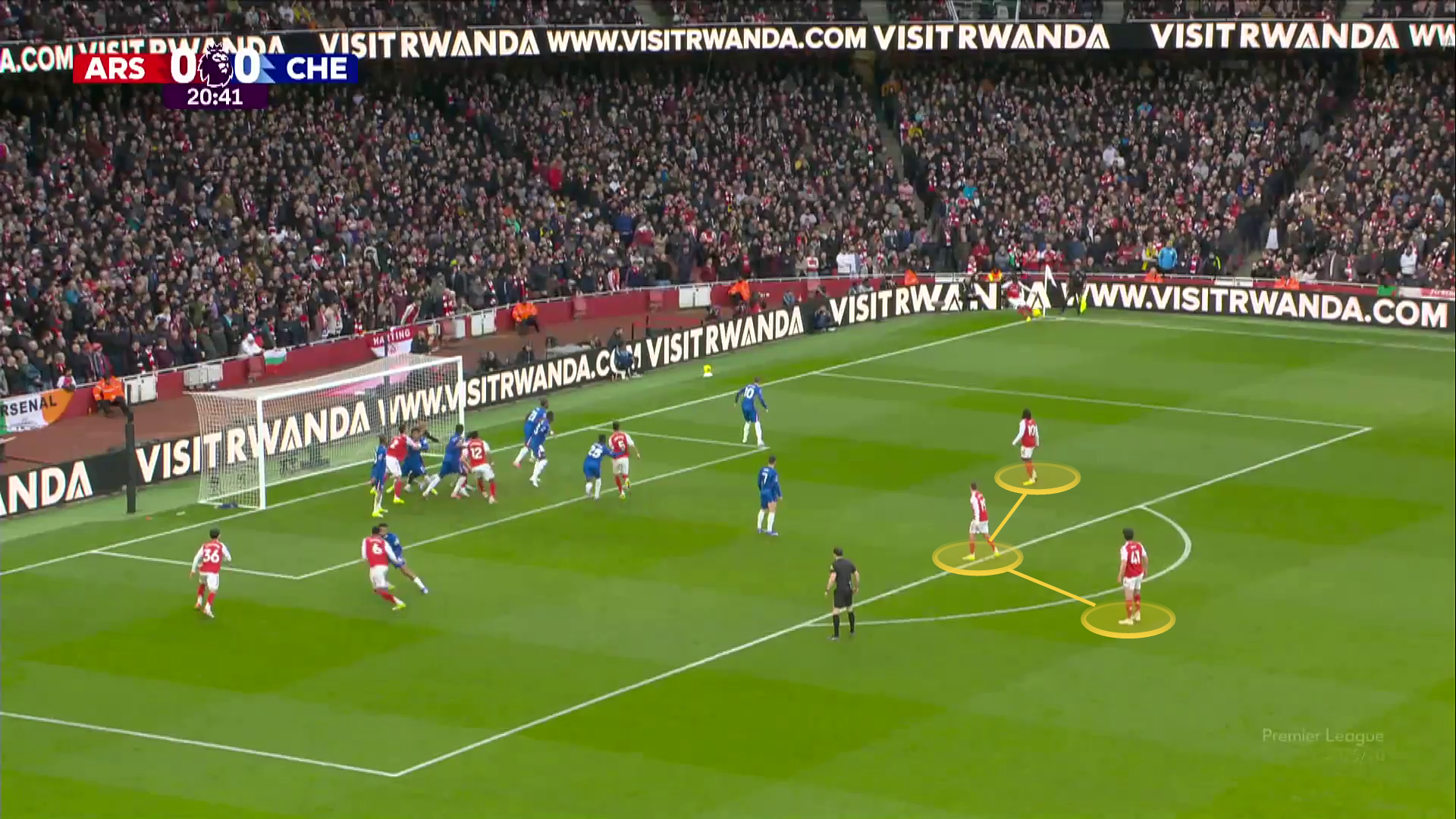
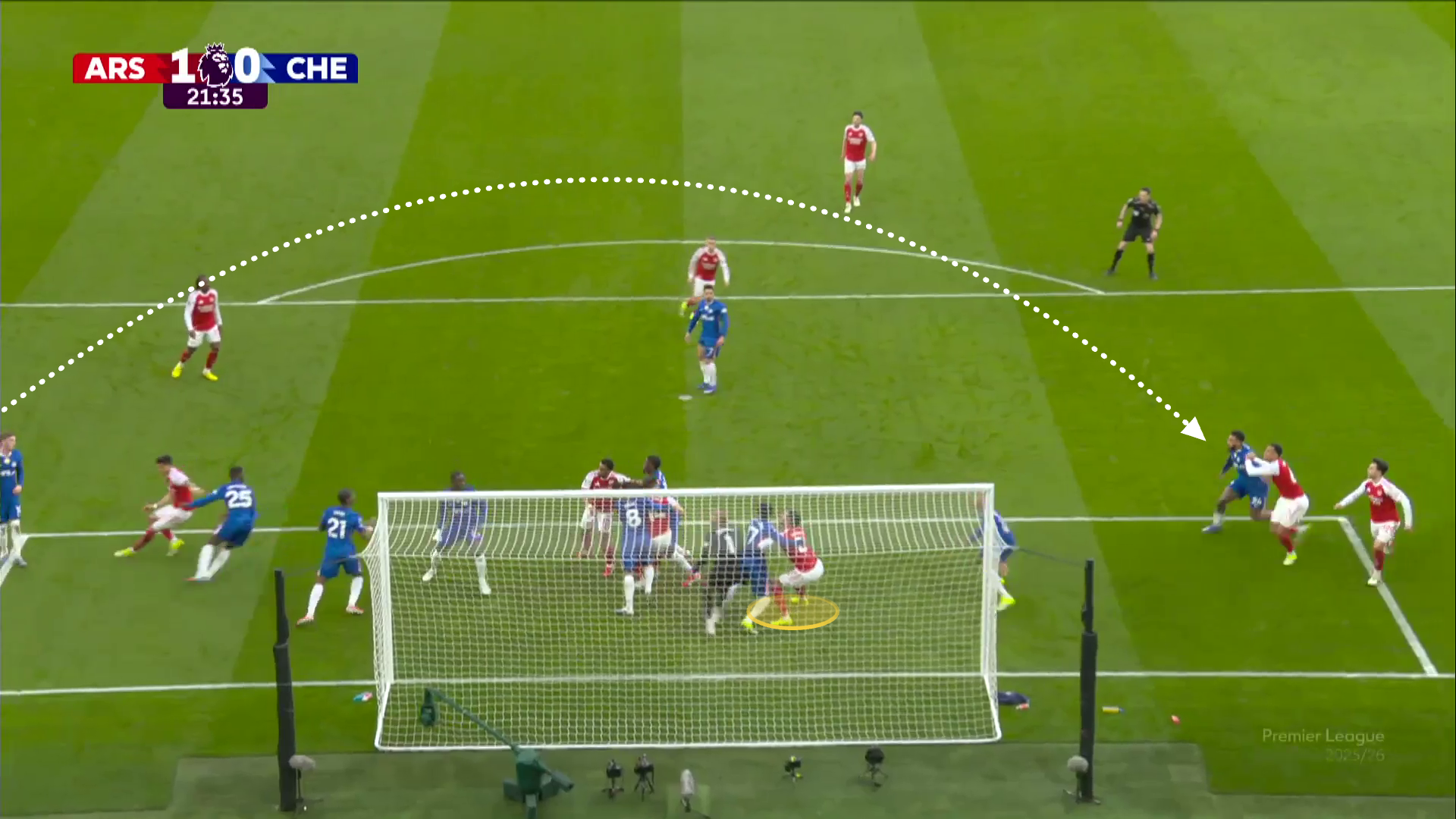
Chelsea, in their Premier League loss to Arsenal, deployed a hybrid system with five players defending zonally: Jorrel Hato and Trevoh Chalobah at the near post, Cole Palmer on the near side of the six-yard box, Pedro Neto on the penalty spot and Joao Pedro at the back of the goalmouth, with five others man-marking Arsenal‘s dangerous threats.
It is a setup that Nicolas Jover, Arsenal‘s set-piece coach, would have noted before devising his own attacking plan.
Zonal defenders hold their position rather than following players with the rationale being they are in dangerous areas of the box that need to be protected.
The near post is often a zone where attackers look to flick the ball on from and Pedro’s position is often where teams, including Arsenal, look to arrive before heading the ball home.
Being able to predict the defensive positions of certain players from corners helps attacking teams create routines that look to open up and exploit existing space.
With three Chelsea players locked to the near post, Arsenal knew the back post would be short of numbers.
Blockers and the art of creating space
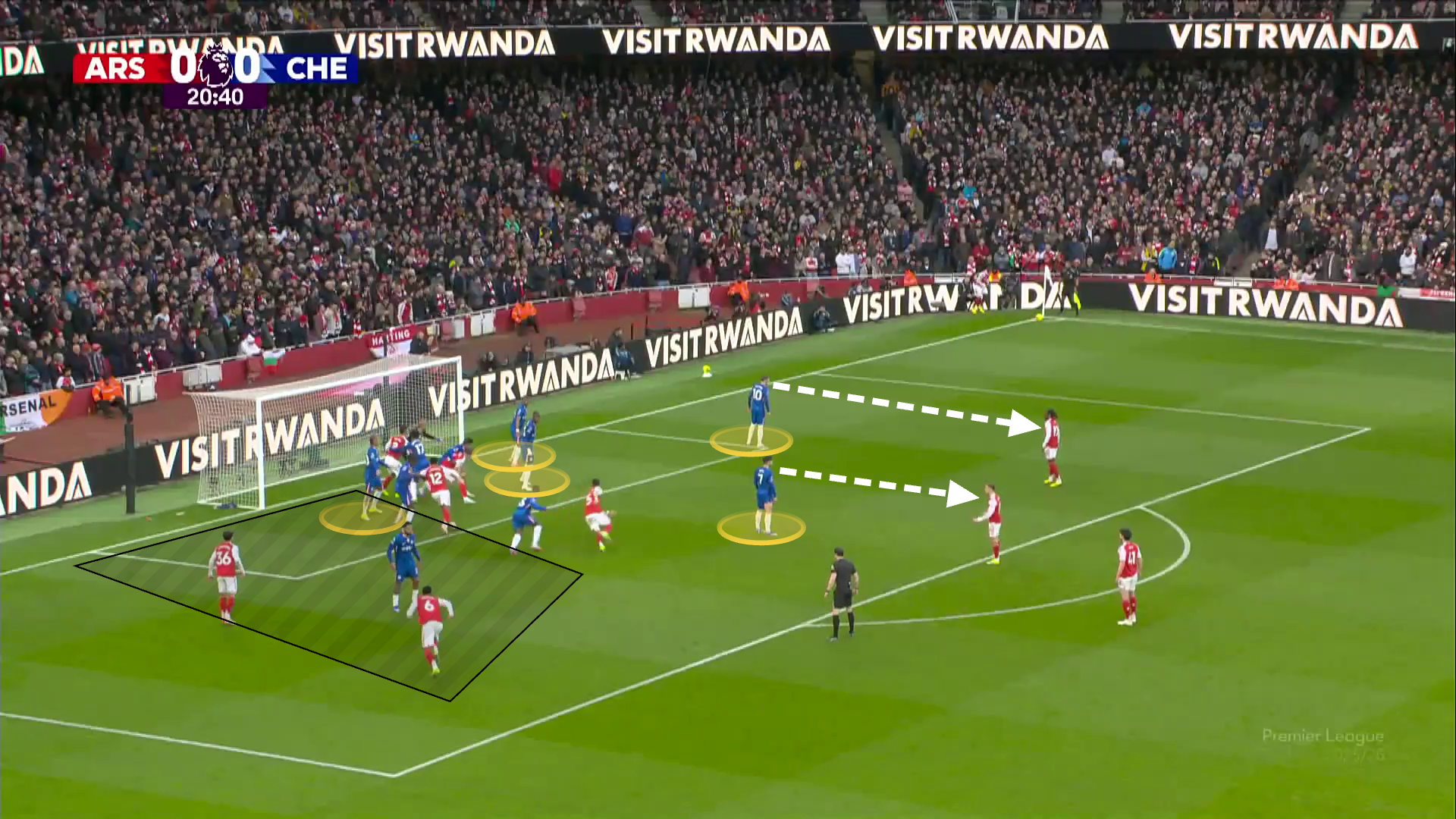
Arsenal‘s fullbacks, Piero Hincapie and Jurrien Timber, began deep towards the back post. Their markers, Mamadou Sarr and Moises Caicedo, grappled them tightly.
In this example, the Chelsea players have roles as ‘blockers’ – a tactic that is increasingly common from corners, with the aim of nullifying the strongest aerial threats by impeding their movement.
Chelsea however failed to block Arsenal‘s fullbacks well.
One of the defining trends of this season is exploiting man-marking through movement and with space for the attackers to run into, both Hincapie and Timber were able to sharply move sideways before attacking the near post which helped them get free.
This pulled the Chelsea players with them and away from the back post.
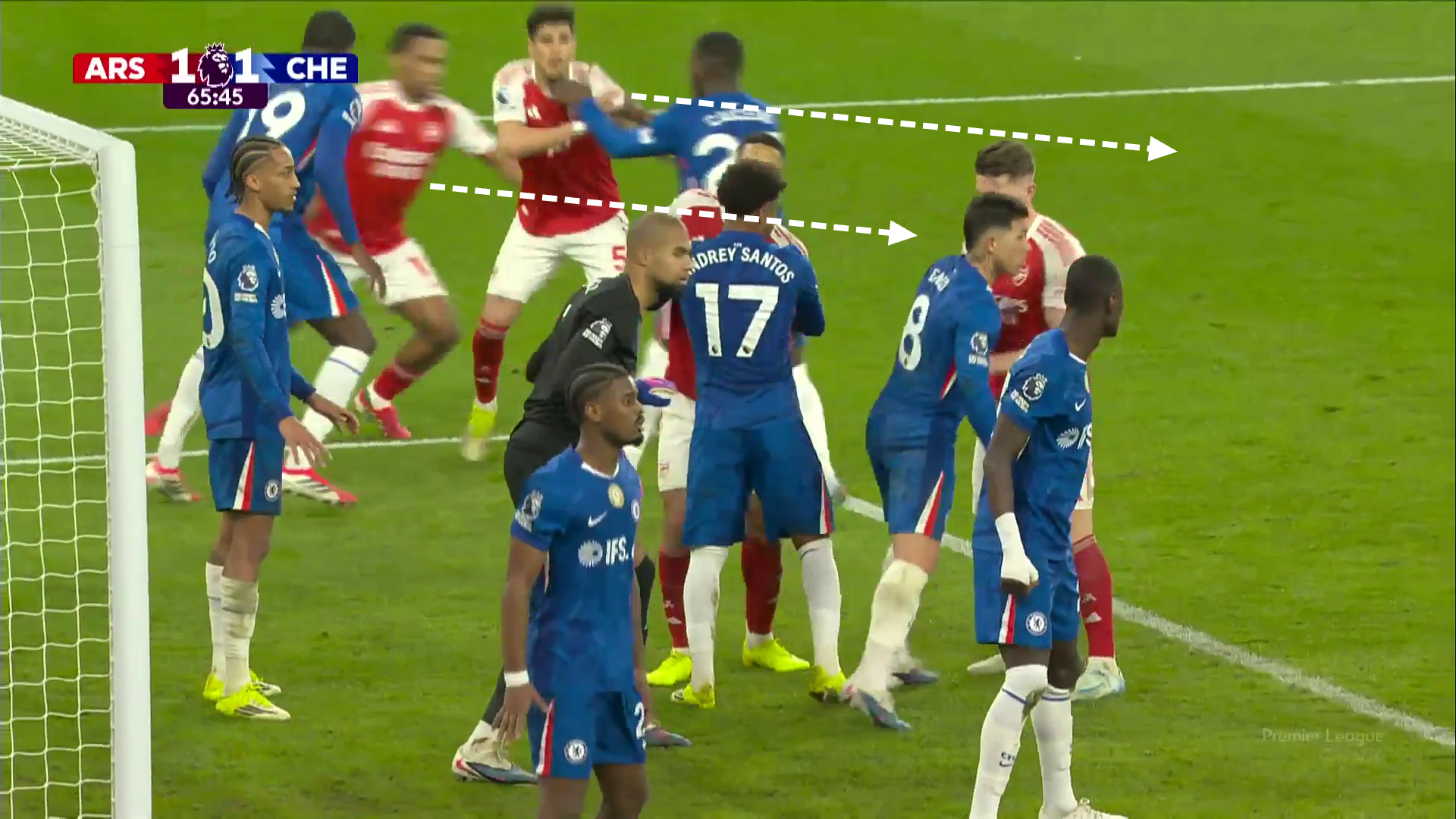
Blocking works both ways, too. William Saliba, man-marked by Andrey Santos, used his marker almost as a shield to push into goalkeeper Robert Sanchez, stunting the Chelsea keeper’s ability to claim crosses.
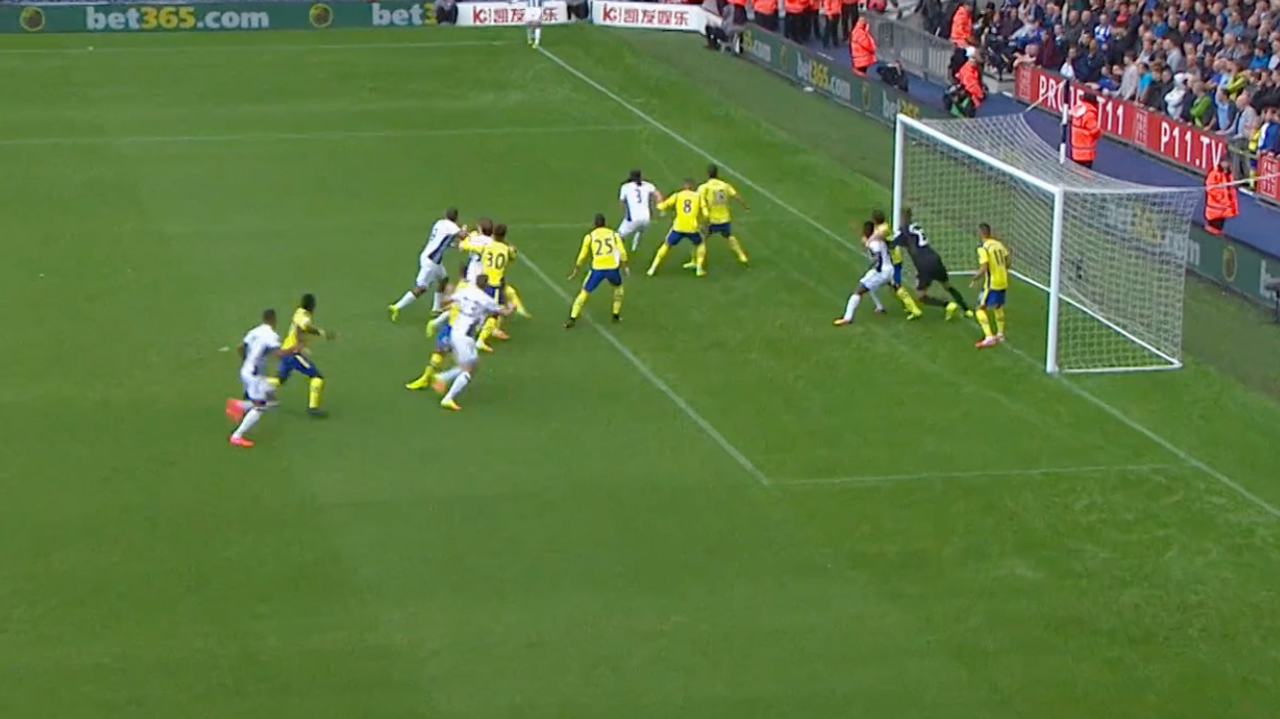
This tactic has been key to successful corners long before this season. Tony Pulis’ West Brom side, who scored the most set-piece goals in one season (until Arteta’s Arsenal broke that record this campaign), utilised blocking in an eerily similar manner below

In-swingers reign supreme
Bukayo Saka’s left-footed delivery for Arsenal‘s opener was an inswinger, a deliberate choice that Arsenal have used this season.
Inswinging corners have become the dominant delivery type across the league this season.
They bend towards goal and, with teams allowed to play physically while packing the six-yard box tightly, it is harder for keepers to claim the ball.
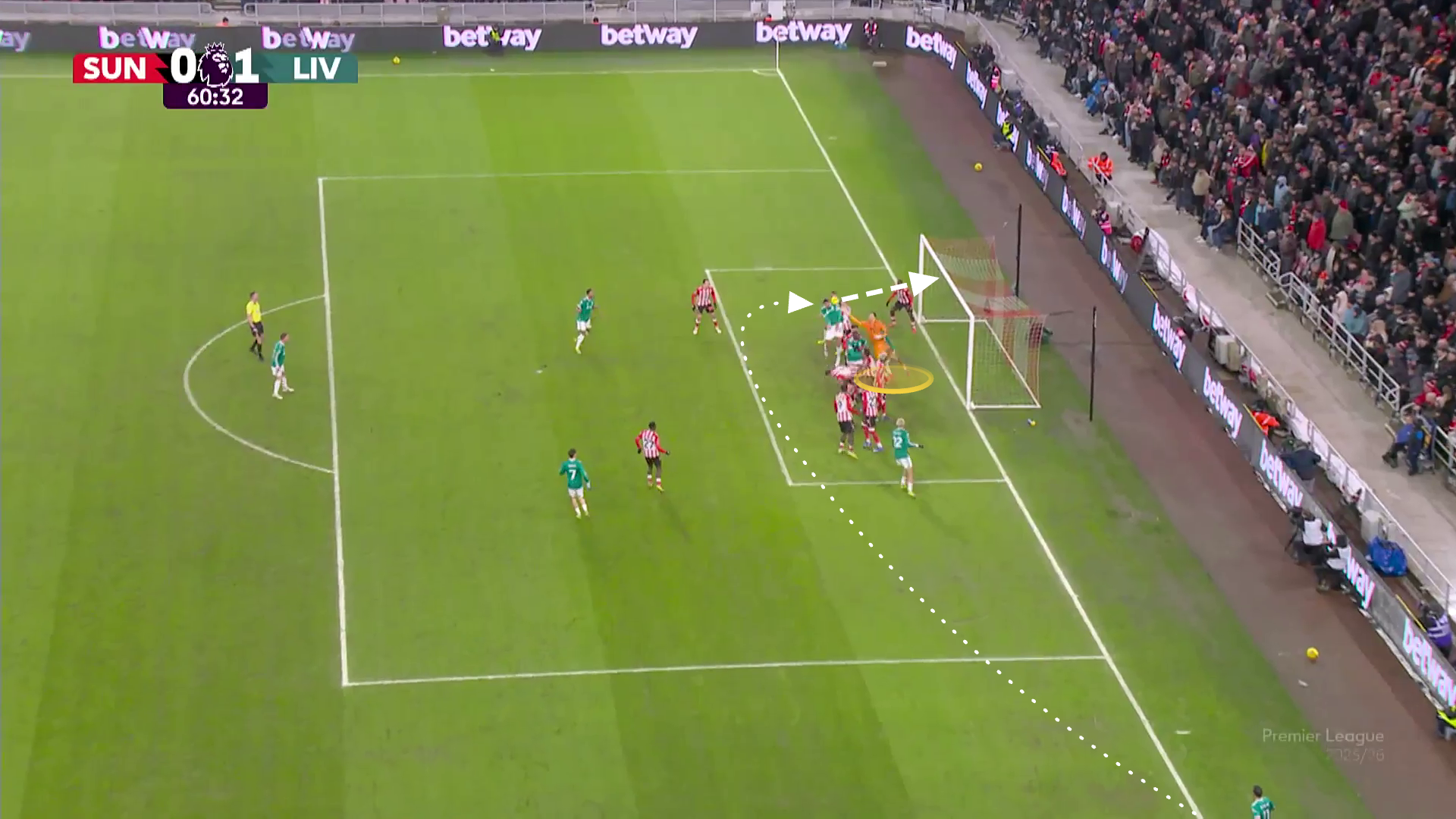
Liverpool‘s improvement from set-pieces since the turn of the year offers clear evidence of this shift.
They began the season as one of the worst set-piece teams in the league. After changing their set-piece analyst and replacing Dominik Szoboszlai’s outswinging routine with Mohamed Salah’s inswingers, their output from corners improved.
How these tactics came together for Arsenal against Chelsea
For Arsenal‘s opening goal, the inswinger was not aimed at the crowded near post but instead deeper, targeting the area where Gabriel arrived at pace from a deep starting position.
This gave Gabriel momentum that made him nearly impossible to stop with Reece James doing his best to block the run from a relatively static position.
Aiming to place the ball deeper and heading it back rather than towards goal was likely a deliberate choice to minimise the impact of Joao Pedro’s zonal defending, who stood where Arsenal often target for the first contact.
The Brazilian, although an apt dueller, was caught watching the ball like many zonal markers do.
Stuart Reid, a freelance set-piece consultant who has worked in the Serie A, Major League Soccer and the Championship, said: “The problem with zonal marking is that you need awareness constantly. You have to know where the ball is but also who is likely to attack your zone and when they’re going to be arriving.”
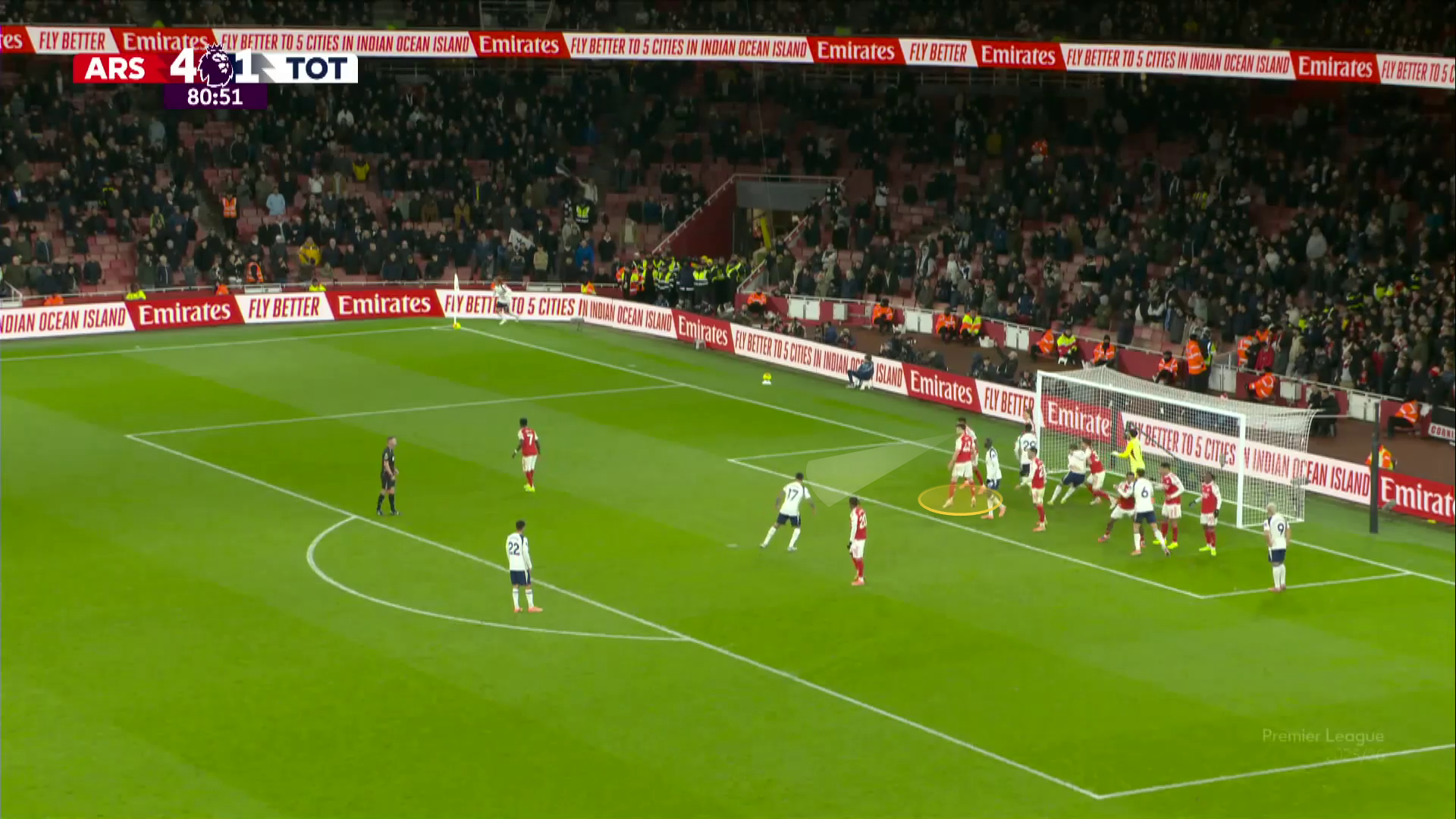
As all of this happened, Saliba and Victor Gyokeres positioned themselves between their markers and the target zone.
As the cross came over, Chelsea‘s defenders could not run back as both players were in their path.
This tactic of playing over defenders who find themselves blocked is another remarkably effective trend across the league.
By the time Gabriel headed the ball back across goal, Sanchez was unbalanced from his duel with Saliba and Santos, and Arsenal‘s two central defenders combined to finish the move.
Pushing the boundaries of set-plays
Not all of these concepts are new but they are now being pushed to their limits, both in the resources allocated and in what is allowed legally.
Every major club now has a dedicated set-piece analyst and routines are designed using advanced aerial duel metrics that assign each player a probability rating that takes into account the quality of opponent they win headers against.
This helps teams identify which defenders are most worth neutralising with a blocker.
Perhaps the biggest change however is in the league-wide prioritisation of set-plays.
Historically, smaller sides used corner kicks as a way to bridge the gap against wealthier teams.
The Stoke, West Brom and Bolton sides managed by Tony Pulis and Sam Allardyce illustrate that point well, with Brentford hiring specialist coaches that aimed to maximise fine margin gains earlier than the rest of the league too.
Jover took his work from Brentford to Manchester City to now Arsenal and the irony is not lost on those who remember Arteta’s former manager Arsene Wenger publicly criticising Stoke for playing ‘rugby’ from set-pieces.
But the current Arsenal boss, like many of the top coaches, is using set-pieces to gain a necessary mathematical edge when competing at the top of the table.
This analysis was developed through conversations with Stuart Reid, freelance set-piece consultant.