







As the days pass since the earthquake that was the Gorton and Denton byelection, the result is being parsed in the usual ways. A mid-cycle protest vote and frustration with the pace of “delivery”. Some have even blamed the electorate itself. More reflective voices have called for a “reset” or a reaffirmation of “Labour values” – often shorthand for an internal recalibration.
All of those contain fragments of truth. But none explains the scale of what now confronts Labour – and the country.
This is not a communications problem. It is not a personality problem. It is not even primarily a leadership problem, though leadership is clearly an aggravating factor and a constraint on the scale of change required. This is a legitimacy problem: the legitimacy of a political status quo that appears to monopolise what is considered possible – the pace, scope and direction of change. And increasingly, even its right to govern within a democratic system.
To understand its origins, we have to look beyond the news cycle. The crises since 2008 did not arrive in a vacuum. The financial crash exposed the fragility of an economic model decades in the making – shaped by Thatcherite marketisation, financialisation and the steady retreat of democratic control from key sectors of the economy.
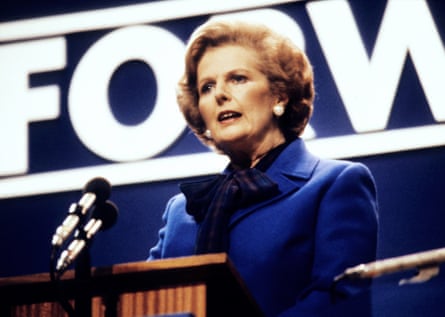
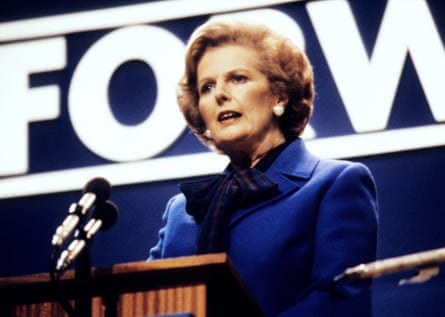
New Labour did not dismantle that settlement; it stabilised and deepened it. Margaret Thatcher herself recognised as much when she said her greatest achievement was New Labour. The architecture of liberalised finance, privatised infrastructure and deference to corporate power was not reversed. It was normalised.
In the political economy of Peter Mandelson, architect of that thinking, proximity to wealth – politically, personally and in policy formation – became a mark of seriousness. Access became influence; influence shaped direction. Labour grew increasingly fluent in the language of markets, less confident in the language of democratic power.

That settlement has now exhausted its legitimacy. A disillusioned public recognises continuity where it was promised change. Nothing short of a decisive break with Thatcherism will suffice. Not managerial tweaks. Not rhetorical resets. A break.
Since 2008 that model has entered a more turbulent phase. Austerity hollowed out public services. Wages stagnated. Brexit fractured constitutional and economic arrangements. And the climate crisis has intensified. Meanwhile, AI is unsettling labour markets and democratic discourse and institutions once considered stable – from the BBC and trade unions to the monarchy and political parties – sway in the winds of rapid change. War in Europe and the Middle East, global instability and widening inequality reinforce a pervasive sense that the ground is shifting.
When crisis becomes permanent, politics becomes brittle. Faultlines widen into chasms.
In that context, the Gorton and Denton denouement is not a single result: it reflects a deeper conclusion. Voters increasingly believe the political settlement itself no longer works for them. Not merely the party settlement, but beyond that: they rejected the whole thing.
The public hears the language of change, but sees continuity in practice – continuity with a model that prioritises market confidence, investor reassurance and fiscal orthodoxy over democratic transformation.
This integrity gap is particularly dangerous for Labour. After 14 years of Conservative government, voters were primed for renewal. Instead, many perceive caution, deference to entrenched interests and reinforcement of the very system they believe is failing them. For a party that once claimed to challenge establishment power, that perception is corrosive.
Labour’s recent internal political culture has been shaped by centralisation and control. The factional struggles of recent years produced a leadership model defined by discipline and the marginalisation of dissent. It should not surprise us that this culture has travelled into government.
The narrowing of protest rights, politicised bans, expansive public order powers, looming restrictions on trial by jury and the dilution of long-held human rights conventions do not exist in isolation. They sit within a broader pattern: authority consolidating at the centre in response to instability, while economic power remains structurally insulated from democratic challenge.
At the same time, the state’s deepening relationship with private technology firms such as Palantir in public data infrastructure – however lawful – reinforces unease about corporate proximity and opacity. When citizens feel excluded while corporate actors appear embedded within decision-making, distrust grows. This is not conspiracy. It is political reality.
The rise of Reform and the Greens must be understood in that context. They are ideologically distinct, even opposed. But they now perform a similar systemic function: they attract voters who no longer believe the political mainstream – Labour and the Conservatives – is capable of representing them.
This is not simply protest. It points to something more profound – a crisis of legitimacy within the governing model itself. When large numbers conclude that acceptable policy has narrowed beyond recognition, that core economic decisions are insulated from democratic challenge, and that proximity to wealth carries more weight than proximity to voters, faith erodes and political earthquakes ensue.
For some, that erosion is rooted in economic insecurity. For others, in environmental urgency or cultural dislocation. The details differ. The diagnosis converges: the system feels closed. And when a system feels closed, politics fragments.
The answer then is not sharper slogans about “growth” without clarity about who benefits, nor recycled promises of “change” without structural substance. A legitimacy crisis cannot be communicated away. It must be confronted.
Confronting it requires far more than managerial adjustment. It requires a decisive break with the political, cultural and economic settlement that has defined Britain since the 1980s.
Power must move downwards. Genuine fiscal and administrative devolution would allow communities to shape their own priorities. Local government must be restored as a site of democratic agency, not treated as an administrative arm of Whitehall.
Politics must be visibly cleaned up. Stronger controls on donations and lobbying, greater transparency in public contracts and the long-promised Hillsborough law would rebalance power between citizens and the state.
The electoral system must change. First past the post manufactures artificial majorities and entrenches safe seats. Proportional representation would not eliminate distrust overnight, but it would reflect the pluralism that already exists.
A people’s assembly for constitutional renewal could begin a broader conversation about how power is exercised. The Brexit years exposed how brittle our arrangements can be. Renewal cannot be left to elite management alone.
Economic reform must accompany democratic reform. Public control of natural monopolies such as water is not nostalgia; it is a response to a privatised model that has delivered high bills and weak accountability. Housing, care, transport and energy networks cannot remain structured around shareholder extraction while democratic institutions absorb the social cost.
Until control over the foundations of everyday life is democratised, no government will fully resolve the cost of living or cost of doing business crises. Economic renewal requires a decisive downward transfer of power to people and communities.
None of this is radical for its own sake. It is necessary because the alternative is continued democratic erosion.
So, having had time to reflect, what should we now think about Gorton and Denton? That it should not trigger panic, but nor should it be dismissed as noise. Because it is a warning.
Legitimacy, once thinned, is hard to restore. It will not be rebuilt through tighter grid management or more disciplined lines at the dispatch box. It will be rebuilt only through a visible rebalancing of power – political and economic – away from concentrated wealth and back towards democratic control.
This isn’t just a glitch, but it could be a beginning. If it finally prompts a reckoning with the post-Thatcherite settlement, it could yet mark the democratic renewal Britain now requires.
-
Clive Lewis is the Labour MP for Norwich South


