








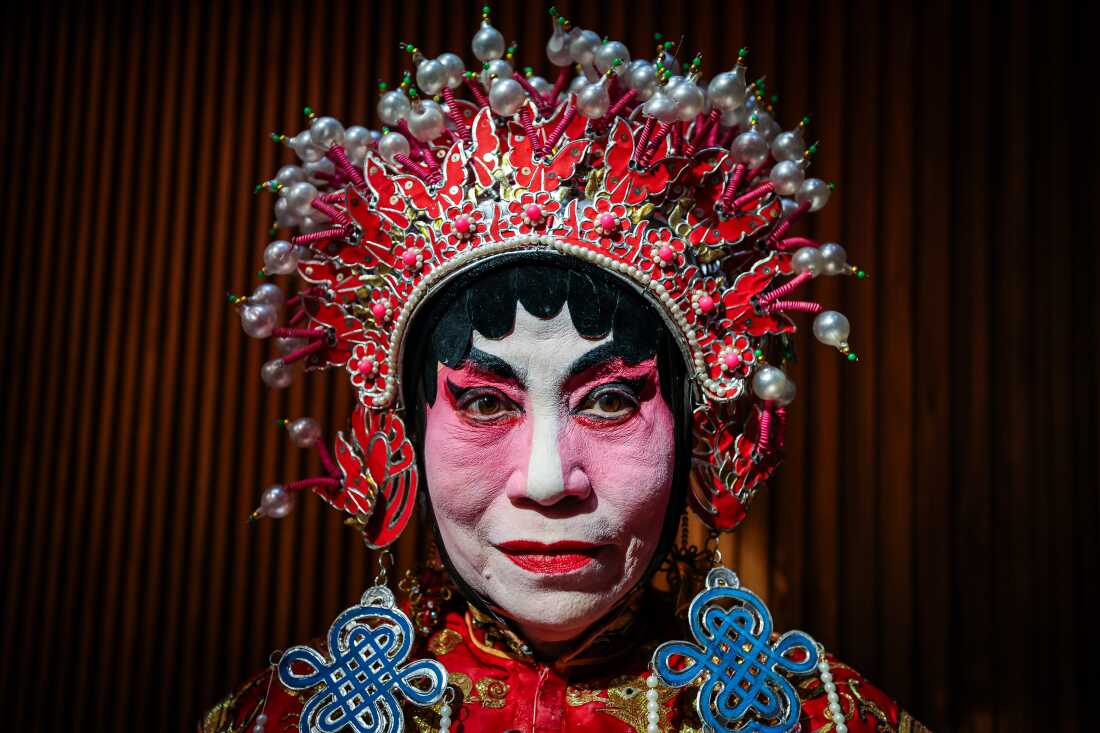
Jean, 72, a Chinese opera performer, poses for a portrait before performing in Kuala Lumpur, Malaysia. Annice Lyn/The Everyday Projects
Annice Lyn/The Everyday Projects
March 8 is International Women’s Day — a date picked in honor of a remarkable Russian protest.
During World War I, women in Russia went on strike. They demanded “bread and peace.” Among the results of their four-day protest: the Czar abdicated and women gained the right to vote.
This bold strike began on Feb. 23, 1917, according to the Julian calendar then used in Russia. That date translated to March 8 in the Gregorian calendar that much of the world uses. So that’s the day chosen for this celebratory event.
True to the spirit of those Russian women, the world pauses on this day to celebrate the achievements of women. This year to mark International Women’s Day, the United Nations is calling for “Rights. Justice. Action. For all women and girls.”
Sponsor Message
Sometimes, the true achievements are the ones that we barely see. The photographers at The Everyday Projects, a global photography and storytelling network, have shared portraits of women who in ways large and small are determined, like those Russian women over 100 years ago, to improve the lives of women and to build a better world.
Singing with strength
Kuala Lumpur-based photographer Annice Lyn likes to highlight the strength, resilience and the stories of women who are often overlooked.
That’s the inspiration for her portrait of Jean, 72, as she prepares for a performance of Chinese opera at Kwai Chai Hong, a restored heritage alley in Kuala Lumpur’s Chinatown in August 2024.
Such performances, typically staged during festivals and temple celebrations, combine singing, acting, martial arts, elaborate costumes and symbolic makeup to tell classical stories from Chinese folklore, history, and literature.
“Performers like Jean often dedicate decades of their lives to mastering this art form, preserving techniques and stories that are centuries old,” says Lyn. They told her that they may encounter negative reactions — questions like “are you wasting your time” or simply indifference.
“Sustaining a centuries-old practice in a modern urban setting requires both resilience and passion,” says Lyn, who made this picture minutes before the performance. “I wanted to give Jean the dignity she deserves through this portrait, a strong, intimate image that acknowledges her beauty, her discipline and the life she has dedicated to Chinese opera. I hoped to make her feel seen and heard, capturing not just a performance but a living cultural legacy.”
Dreaming of a toilet 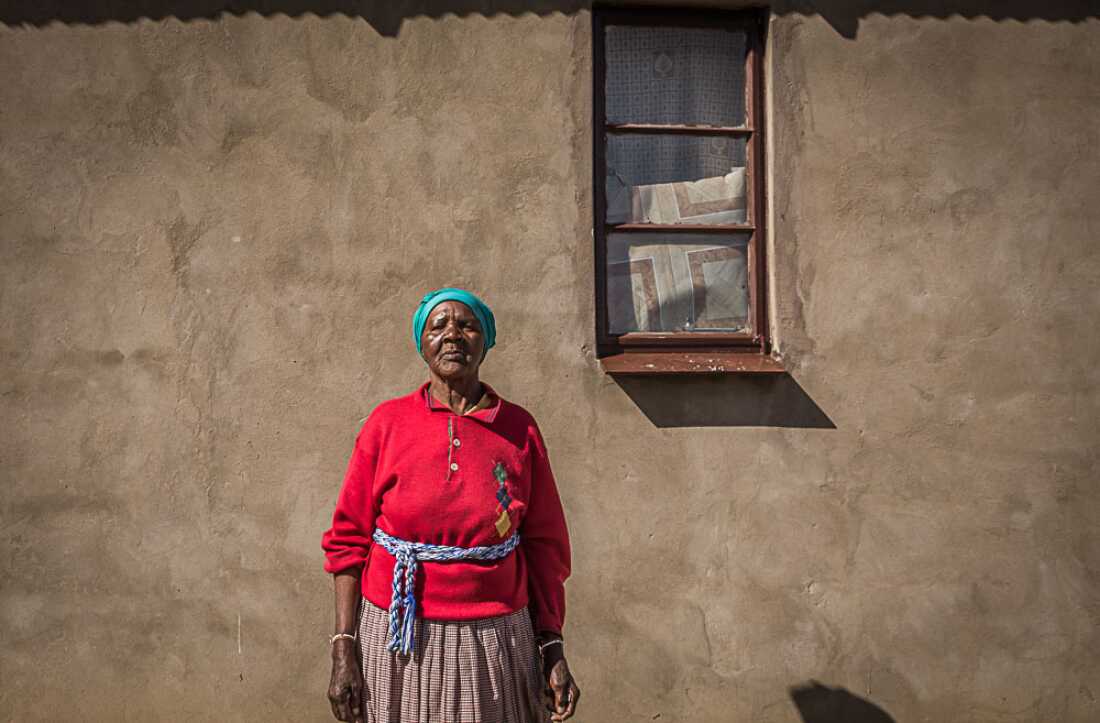

Nkgono Selina Mosima, a resident of Thaba Nchu, Free State, South Africa, has hoped for years that she could afford to dig a pit toilet in her yard. Tshepiso Mabula/The Everyday Projects
Tshepiso Mabula/The Everyday Projects
The subject is Nkgono Selina Mosima, a resident of Thaba Nchu, Free State, South Africa, a region where poverty is rampant, Mosima is one of many residents who lack proper sanitation, says Tshepiso Mabula, a photographer and writer based in Johannesburg. Her wish was to hire someone to dig a pit toilet in her yard – in which human waste is collected in a pit and allowed to break down naturally over time – but she couldn’t afford the cost. The alternative is open defecation – finding a secluded place despite the personal risks and the potential health consequences of untreated human excrement.
“I was drawn to Nkgono by her unrelenting faith and positive outlook; despite her difficult circumstances, she constantly reiterated her hope that things would improve,” says Mabula. “This inspired the framing of the portrait: the bright colors, her headscarf and the belt around her waist all serve to highlight her strength, optimism and faith.”
The picture was taken in 2020. Today, Mabula says, many women still lack safe and effective sanitation options. Nkgono was a powerful voice for action and change as she eventually could afford to dig a pit toilet on her property.
Russian footballers 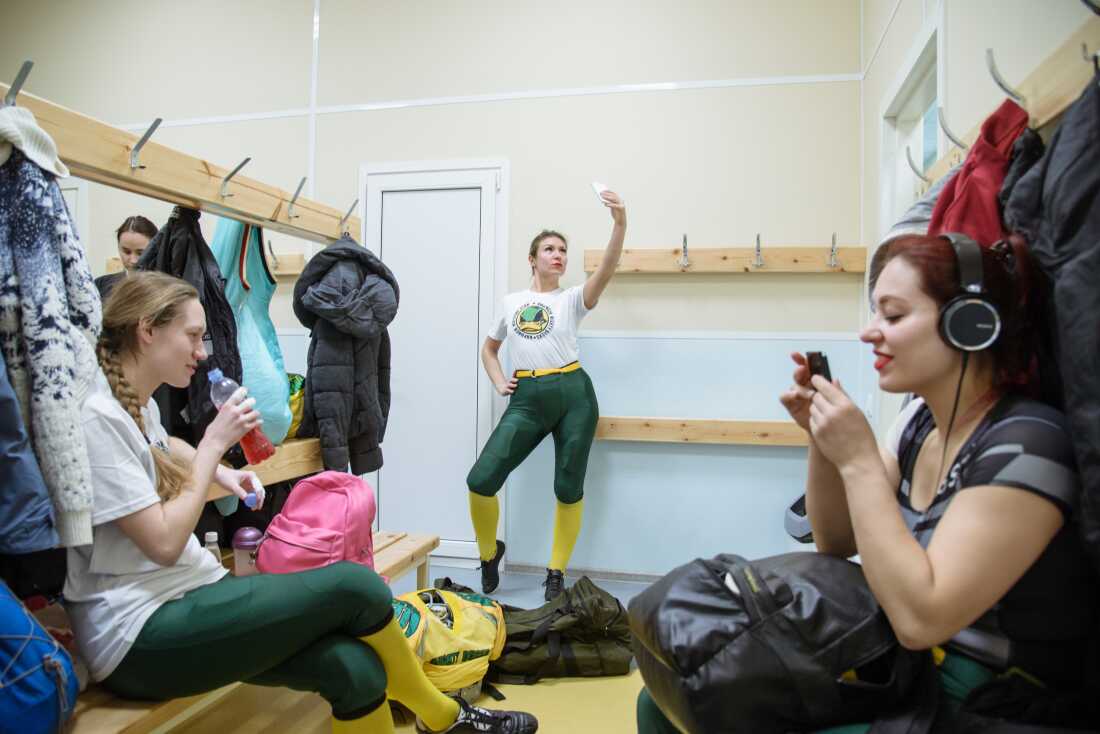

These women from Voronezh, Russia, participated in the country’s short-lived but intense American-style football league. They’re hanging out in the locker room. Kristina Brazhnikova/Everyday Russia
Kristina Brazhnikova/Everyday Russia
It seems improbable — starting an American football league for women in Russia. Not soccer but football. That’s what Portugal-based photographer Kristina Brazhnikova is documenting in her project “Mighty Girls,” which she shot between 2018 and 2021.
Any Russian woman could join, regardless of age, body type or level of training, she says. Coaches from the U.S. women’s national football team participated.
In the photo, the girls from the Voronezh team “Mighty Ducks” (Gabi, Katya, and Olesia) are in the locker room of a training camp preparing for practice. Team members came up with the name, she says.
“Everything was built on enthusiasm, so the players had to study the rules and playbooks on their own. Some women were invited by friends, others were drawn to the unusual nature of the sport, and some simply wanted to improve their physical fitness,” says Brazhnikova, who is Russian herself.
Sponsor Message
After the first practice, many women decided the game wasn’t for them, she says. It requires not only strength and endurance but the ability to memorize complex plays. Players had to buy their own protective gear, pay for field rentals and cover their travel expenses to competitions in other cities.
“Those who stayed, however, found a new family,” says Brazhnikova — and a new form of expressing emotions, including aggression. The women told her that playing American football made them braver and more decisive. They allowed themselves to step outside their comfort zones and push beyond the limits of their usual lives. They changed jobs and left relationships that had run their course. And the sound of pads colliding on the field became their favorite,” she says.
The league ceased to operate in 2022.
Hunting for missing loved ones 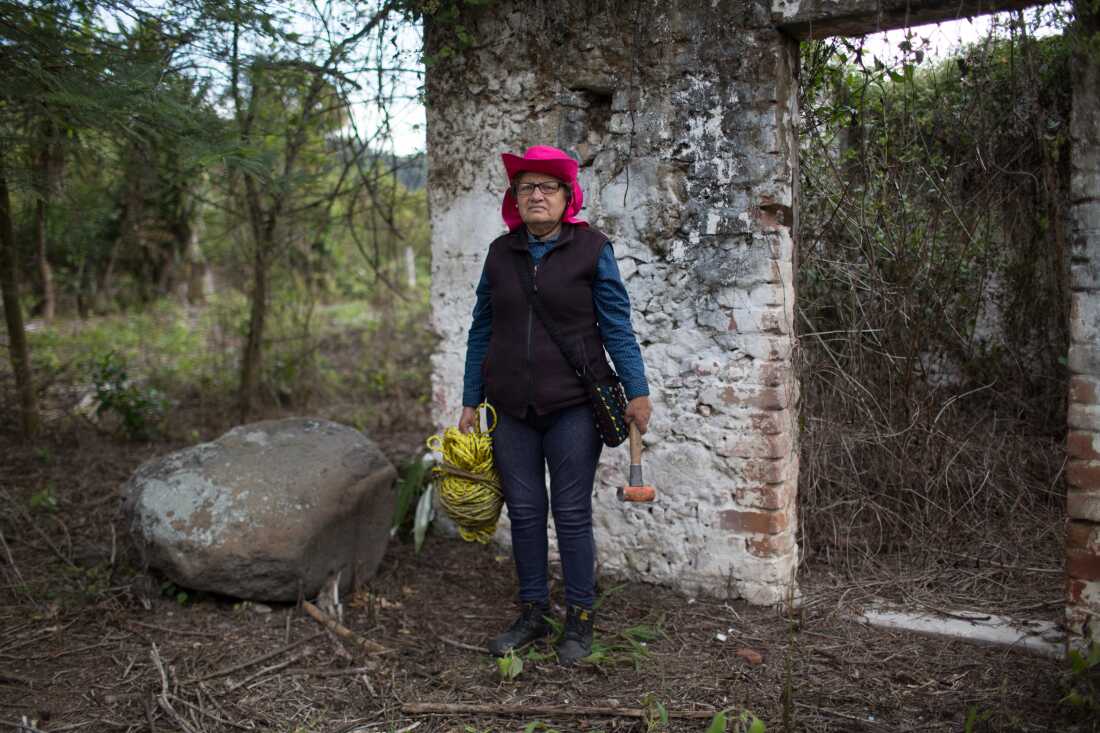
Hilaria Arzaba Medran of Mexico stands with tools she’ll use as she searches a clandestine burial site for the grave of her son, Oscar Contreras Arzaba, who disappeared in 2011 at age 19. James Rodríguez/Everyday Latin America
James Rodríguez/Everyday Latin America
Hilaria Arzaba Medran, 57, is no stranger to loss. Her son Oscar Contreras Arzaba disappeared on May 22, 2011, at the age of 19. A resident of the Mexican state of Veracruz, she’s a member of Solecito, an organization whose 250 members go out and look for their missing relatives on a regular basis. Holding tools in this photograph taken in Feb. 20, 2018, she searches for her missing son and other victims in a location known to have served as a clandestine grave.
“This collective is primarily led by women, and I was awe-struck by their determination to find their loved ones despite horrific violence and real-life threat to their own well-being,” says photographer James Rodríguez.
On this occasion in 2018, Rodriguez and others in the group had received an anonymous tip of a possible clandestine cemetery on the outskirts of Cordoba. She went searching with several other collective members, digging tools in hand. “We went into an isolated rural field that felt macabre in itself and [we] had no sort of security personnel with us. I was truly astounded by their conviction and courage,” he says.
Sponsor Message A demand for housing 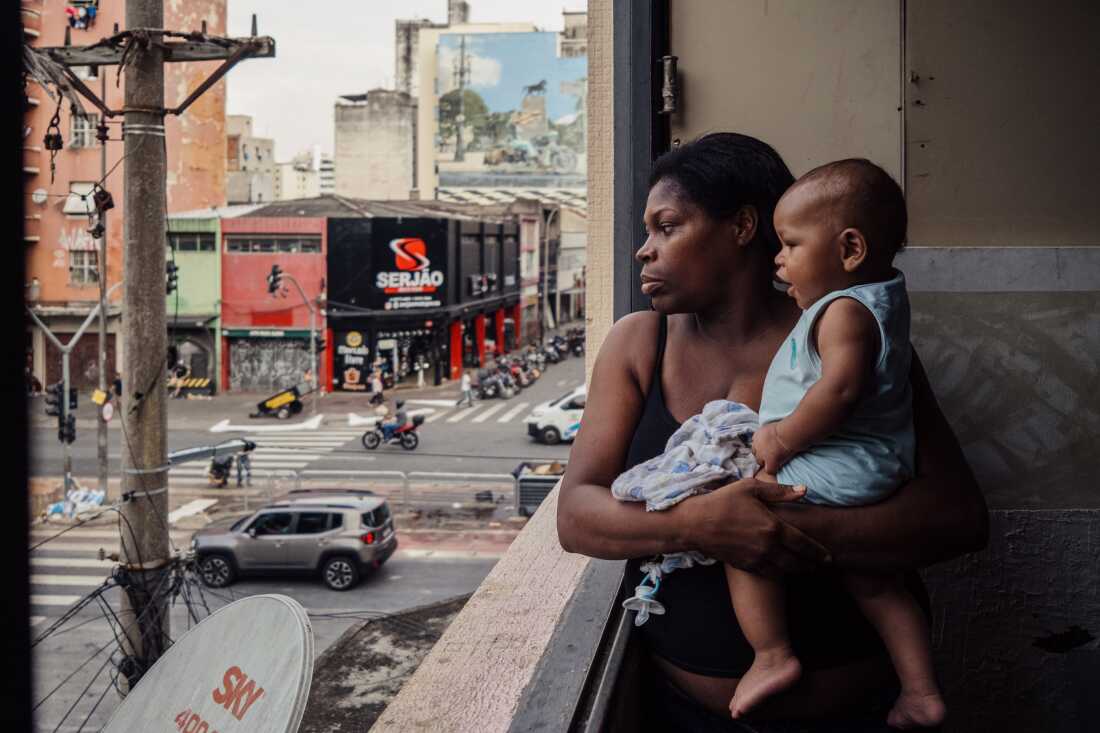
Janaina Xavier, a community leader, holds her son in a building in São Paulo, Brazil, that was occupied by people without housing in 2024. Luca Meola/Everyday Brazil
Luca Meola/Everyday Brazil
Janaina Xavier, a community leader, holds her son while looking out the window of the building where she lives with six of her 10 children near the Cracolândia district in São Paulo, Brazil, on April 23, 2024.
She currently serves as a council member for the Coordination of Policies for the Homeless Population and advocates for the rights of people living in and around Cracolândia.
“I’ve known Janaina Xavier for many years, since I began my long-term work documenting Cracolândia in São Paulo. She has long been involved in struggles for housing rights for people living in this highly stigmatized region of the city,” says photographer Luca Meola.
This photograph was taken inside a building being illegally occupied by Xavier and dozens of other families – a way for them to secure housing in the city center.
“For many low-income families, occupying empty buildings is one of the only ways to remain in the central area and access essential services and work opportunities,” Meola says.
In 2025, the city evicted Xavier, her family and the other residents.
The mother leaders of Madagascar take charge
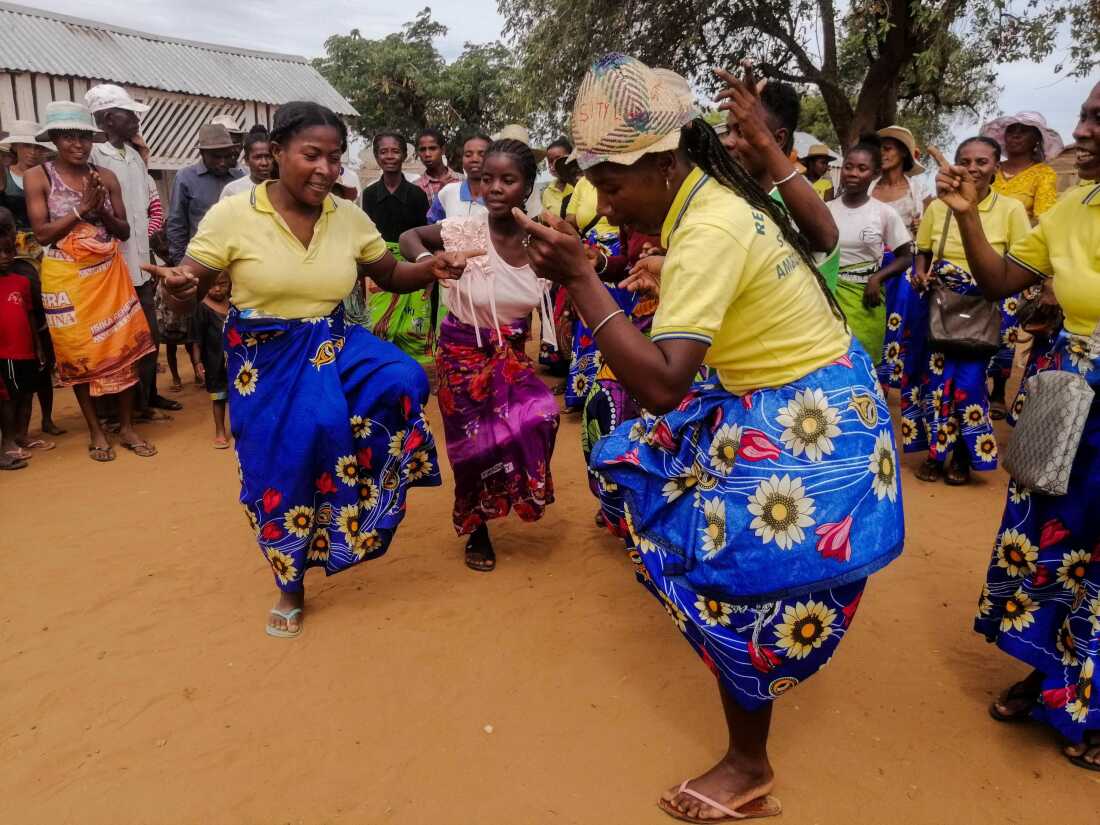
In the Grand South of Madagascar, women known as “reny mahomby,” or mother leaders, perform a welcoming dance before starting a session to teach women in the community how to improve their lives. Aina Zo Raberanto/The Everyday Projects
Aina Zo Raberanto/The Everyday Projects
In this photo from the Grand South of Madagascar, in Amboasary Sud, women known as “Reny Mahomby,” or “mother leaders” perform a welcoming dance.
The “mother leaders” inspire other mothers in the community to make changes in their lives – to improve hygiene, to educate their children, to start small businesses, says photojournalist Aina Zo Raberanto, who lives in this African island nation but had never before visited the Grand South.
The dance took place at the start of a training session, says Raberanto. In this photo from November 2021, she says. “These mother leaders welcome us with a traditional dance from the region. I was deeply moved by their commitment to their community.”
Sponsor Message
The mothers of Madagascar “are the pillars of the household while sometimes facing difficult realities such as violence or early marriage,” she says. “I took this photograph to show both their strength, their dignity, their joy for life and the warmth of their welcome despite the hardships. Behind their smiles and movements lies a great determination to continue supporting their families and to build a better future for their children.”
Marching for their rights 
Members of Puta Davida, a feminist collective advocating for the labor and human rights of sex workers, take part in a march during Carnival in downtown Rio de Janeiro, Brazil, on Feb. 14, 2026. Luca Meola
/Everyday Brazil
Luca Meola
/Everyday Brazil
This photograph was taken during Carnival in Rio de Janeiro this February.
“I have been accompanying the collective Puta Davida for about three years. [It] works to create public debate around sex work, advocating for the recognition of sex work as legitimate labor and for the protection of sex workers’ human and labor rights,” says photographer Luca Meola.
The Puta Davida is a feminist collective from Rio de Janeiro created in the early 1990s by the sex worker and activist Gabriela Leite, a historic figure


