





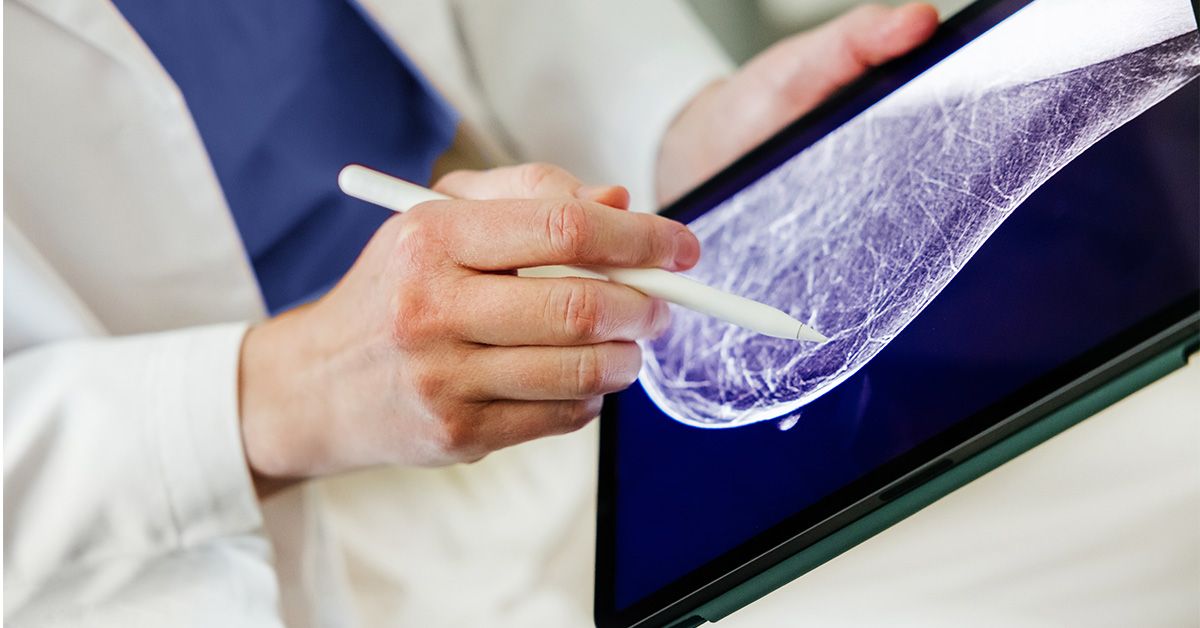
I am hopeful that mammograms will ultimately become a dual screening tool for both breast cancer and CVD risk, and that we will some day look back and say why in the world were we not utilizing this ‘free’ information sooner?
It currently takes some degree of either time or money (or both) to get a reliable BAC reading from a mammogram – either the radiologist needs to carefully review the study and identify calcium in the artery (and not in the fat or other breast tissue) – or an automated model needs to do so.
Currently, this is available in a commercial, FDA-cleared product that is inexpensive but not free. Still, the information is sitting there, and it is clearly related to cardiovascular outcomes; I imagine that as more women become aware of this, we will reach a point in time where women are demanding access to this information.
As for the workflow, once radiologists begin to routinely report BAC (at least in women under a certain age – perhaps 65 or so), I think the next step is simply getting primary care physicians (PCPs) educated about this, and having them comprehensively address cardiovascular risk in women with BAC.
Most of this can be handled by PCPs. When they identify additional risk factors, then cardiology referral and/or additional imaging could be warranted. None of this would require large workflow changes.
– Lori Daniels, MD, FACC