


‘I did what I had to do,” Clyde Best says as he recalls leaving Bermuda at the age of 17 and travelling to England for a trial at West Ham. There was no fear, no thought of homesickness. Best saw opportunity. It was 1968 and, before setting off on his journey, the boy who would go on to be hailed as English football’s first black superstar received some unforgettable advice from his father, a naval officer who later worked as a deputy commissioner in Bermuda’s prison service.
“My dad told me: ‘When you go to England, you’re not playing for yourself, you’re playing for those coming after you,’” Best says. “I always knew that I had some responsibility, and I had to carry myself in a certain way and behave myself in a certain way. I’m not going to do anything stupid and mess it up. If you listen to what your parents tell you, nine times out of 10 you’re not going to have problems.”
Best, now 75, became an inspirational figure. He lives in Bermuda but is back in London to promote a new film, Transforming the Beautiful Game: The Clyde Best Story. It is tenderly put together by Dan Egan, an old friend of Best, and features interviews with black footballers who marvelled at the former West Ham forward’s impact.
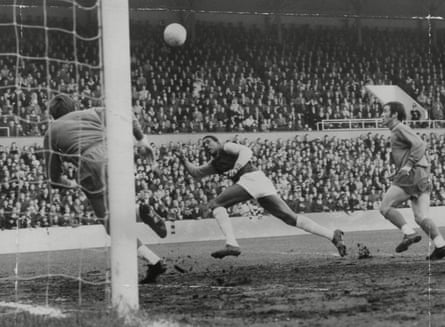
It is striking to hear Ian Wright say he wore the No 8 shirt at Arsenal as a tribute to Best. Viv Anderson, the former England defender, remembers growing up and being blown away when he saw the Bermudan on television.
Best takes the praise in his stride. Did he know he was good when he was playing youth football back in Bermuda? “I’m not a person that would go out and boast,” Best says. He let his football do the talking. He dreamed of playing for West Ham after watching them beat Preston in the 1964 FA Cup final, and quickly rose through the ranks in Bermuda. He cut his teeth at Ireland Rangers and Somerset Trojans, playing tough, bruising games against British sailors and often winning.
By 15 he was a Bermuda international. He was part of the team that finished second at the Pan American Games in 1967 and was on his way to east London after the Bermuda coach, Graham Adams, recommended him to a friend – the West Ham manager, Ron Greenwood.
A trial agreed, Best left home. His mother was inconsolable but his father, a firm but fair figure, backed his son’s wishes. The only problem was that no one was around to meet Best when he landed in London. Unsure of where to go, he got on the tube and went to West Ham station, mistakenly thinking it was near his new club’s ground, Upton Park.
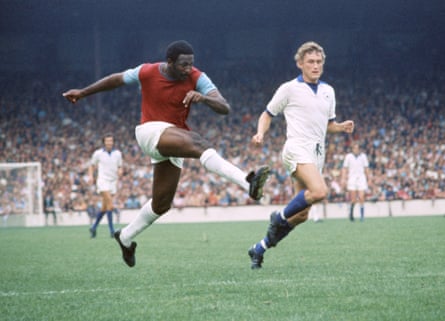
By chance a stranger spotted Best and took him to a nearby family whose two sons were playing for West Ham. They were John Charles, the first black footballer to represent England at youth level, and his brother Clive, who became one of Best’s closest friends.
“I just settled in,” Best says. “With Clive and John, that made a big difference because their mum was there to guide us all and make sure we were able to cope with what we had to cope with.”
Racism was rife in English football grounds. Best knew it would be a challenge but he handled it his own way. “One of the things we always stressed was: ‘Carry yourself in a certain way.’ If someone says something to you, don’t retaliate. To cause more trouble, it’s not worth it. If I acted up all those years ago, how many black kids do you think would be playing football today?
“I was always conscious of the responsibility. It never bothered me. I didn’t mind carrying the weight. But I had a job to do. What pleases me today is you get people saying: ‘I remember you from the 60s, the 70s.’ So I had to have done something that made people happy.”
Best passed the trial and made his West Ham debut aged 18. He played up front with Geoff Hurst. He was teammates with Bobby Moore and Martin Peters. “At West Ham, we had good role models,” Best says. “A person like Bobby Moore, if you didn’t know him, you would have never known he was captain of England. The Lord gave us one of the best human beings that could be on Earth because he would do anything for anybody.”
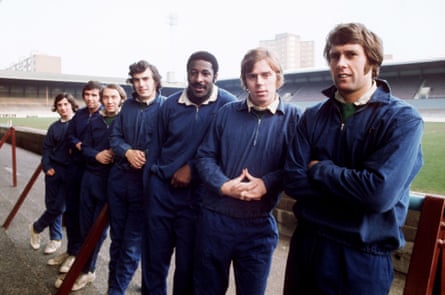
There is praise for Greenwood’s coaching, his focus on passing football. Best quickly established himself in West Ham’s first team. He was quick, powerful and skilful. He had a hammer of a shot and was the first black footballer to score more than 50 goals for West Ham. Michail Antonio, the former West Ham striker, has said Best “laid the ground for every black player in the Premier League today”. In 1972 West Ham became the first English club to field three black players in the same starting XI, with Best accompanied by Ade Coker and Clive Charles.
Yet there were chilling moments. The film features footage from a game against Tottenham and shows the White Hart Lane crowd directing monkey chants at Best. There were no racism protocols for football’s authorities to implement in those days. In the 1972-73 season, the only way for Best to respond to the racial abuse during a game against Everton was to silence the Goodison Park crowd with a virtuoso solo goal.
But it was wearying. There is the shocking tale of an anonymous letter being sent to Best and warning him that acid would be thrown in his face at the following day’s home game. “It was another level,” Best says. He took the letter to Greenwood and a decision was made. Moore, West Ham’s captain, had the team protect Best by surrounding him as they ran out of the tunnel before kick-off. “They were brave,” Best says. “To want to take the acid for me … that’s unbelievable.”
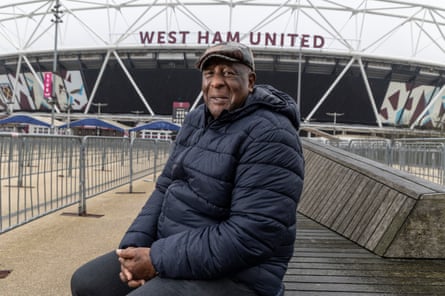
Thankfully nothing happened. Best continued to star for West Ham but gradually he drifted out of the team and was not involved when they won the FA Cup in 1975. It was time for a new challenge. In the film, it is said that Best often called home to talk about the racism he faced. Friends suggest he was happy when he left England in 1975 and joined Tampa Bay Rowdies in the North American Soccer League.
Another adventure began. Best helped the Rowdies win the 1975 Soccer Bowl and he was a star at Portland Timbers. He was Pelé’s strike partner in exhibition matches and became friends with the Brazilian. Their first encounter had come when West Ham faced Pelé’s Santos in a friendly in 1970.
“He scored two that night,” Best says. “And I scored two. He came up to me after the game and said: ‘Clyde, I’m the king, you’re the prince.’ What better person to get it from? I was walking on air for a long time.”
Transforming the Beautiful Game: The Clyde Best Story is showing for a week at Sadler’s Wells East from 25 March
