

Reviewer’s Note: All gameplay experience is based on Highguard’s Episode 2 update (released on February 6th 2026).
If ever a developer would like to dispute the phrase “no publicity is bad publicity” it would be freshman Wildlight Entertainment. In any context, capping off a major awards show as – hopefully – the next big thing would be a dream for anyone; millions of eyes and ears simultaneously tuned in to witness the latest hero shooter. A collective sigh echoed across the globe instead. Fair or not, that attitude reflects a growing exhaustion towards this inundated sub-genre as a whole. Big-budget studios have shut down in similar circumstances. So, it begs the question: does Highguard’s quality reach closer to the empyrean heights of its competition or settle for Midguard?
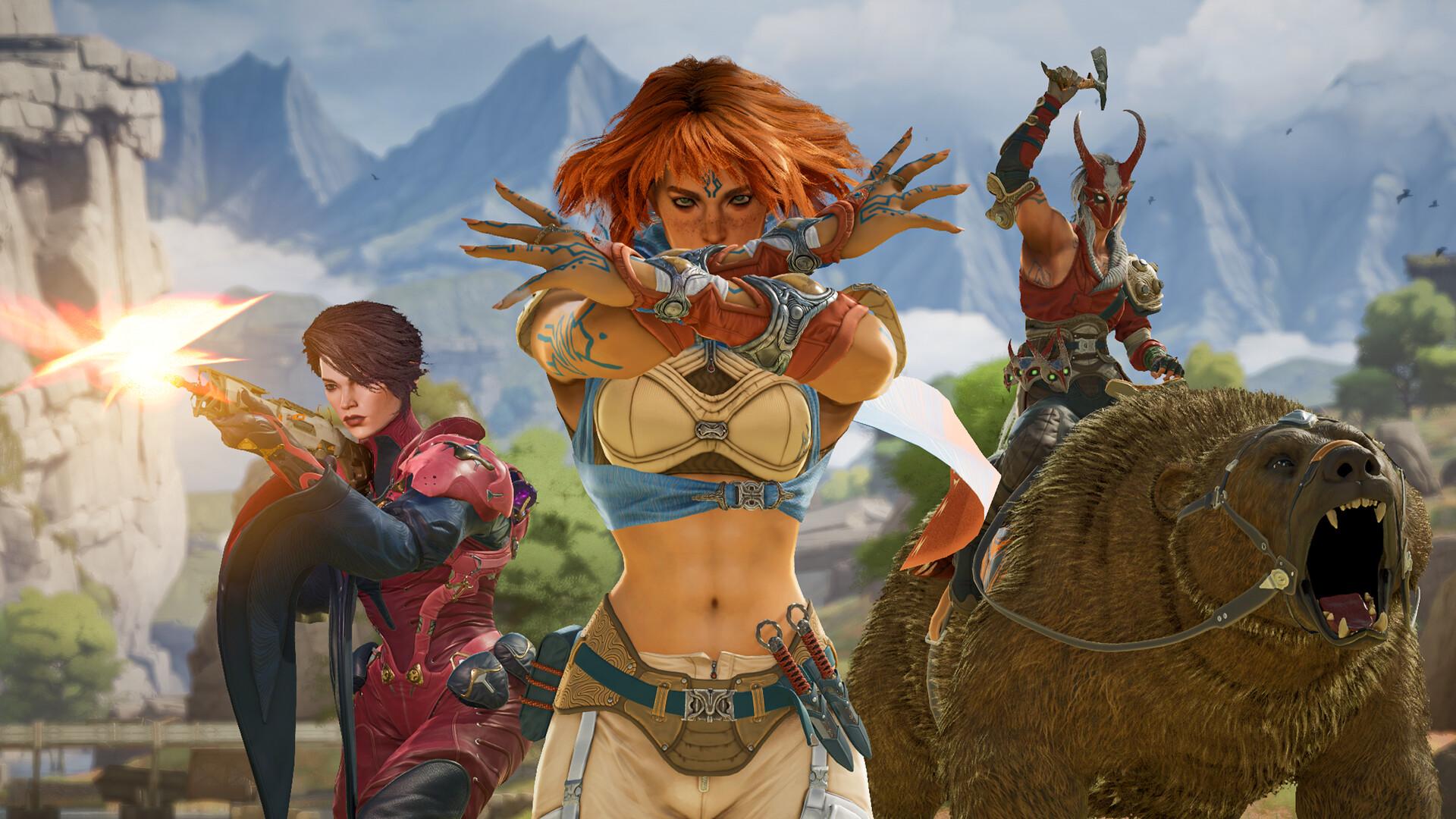
Past the trailer itself, one can immediately deduce its DNA after two minutes. The rhythm and flow of mechanics closely resemble Titanfall and its shared series Apex Legends; the latter being more immediately obvious given the color-coded loot and Wildlight’s conscripted band of magical heroes. Their visual designs only show a few flashes of inspiration, but they all have different Passive, Active, & Ultimate abilities that can prove critical during these multi-tiered sieges.
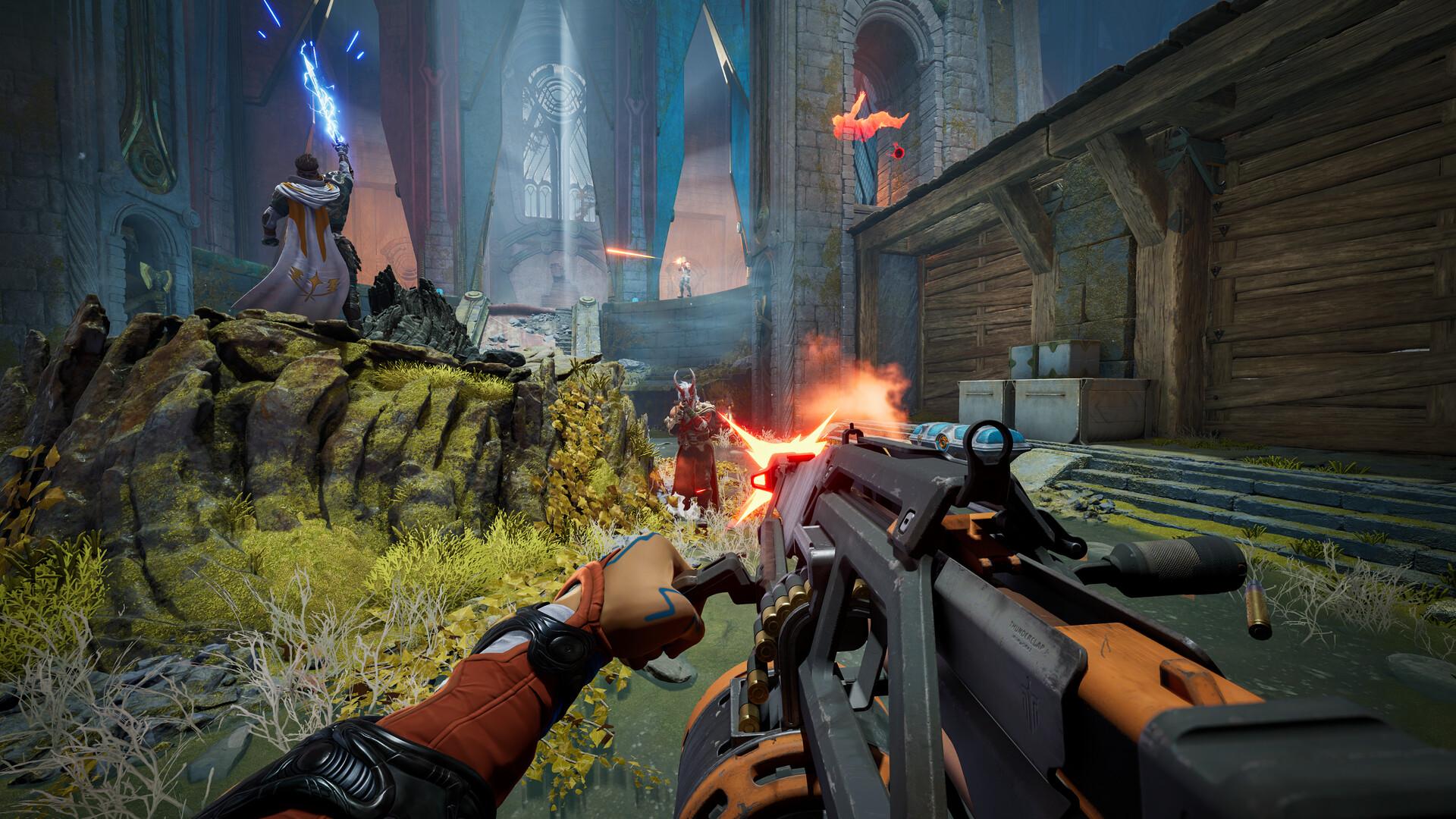
Modes vary between 3v3 or 5v5 matches, with three distinct stages. The first is about reinforcing home base and acquiring better gear than your common (grey) starters, whether by searching chests and/or purchasing from a cheery trader. It’s the truncated RNG loot-gathering of an extraction shooter but with no one parachuting in right behind you. The next stage transmogrifies into a type of Single Flag mode where the glowing “Shieldbreaker” sword has to be run and placed into one of the enemy bases’ special slots. Success results in a siege tower materializing to break open part of the base’s bubble shield. From there, it shifts again to attackers planting a bomb on either one of two generators or the Anchor Stone; destroying one of the former significantly damages base health while the latter results in immediate victory.
Many players can spot the half-dozen macro-scale influences here,but the micro-details within each stage matter just as much. If RNG isn’t treating you well, sparing some down time to mine Vesper (in-match currency) can be more reliable to acquire a better helmet or weapon. For breaking weak wooden walls and gem mounds, there’s a small mini-game of timing your pickaxe swings with a UI prompt; successfully chain your last two swings together and the next wall or mound will shatter with one strike. That heightened emphasis on scrounging for better gear shouldn’t also ignore the importance of securing a foothold around the Shieldbreaker while it’s forming. There’s a genuine push ‘n pull between thinking offensively or defensively from the start.
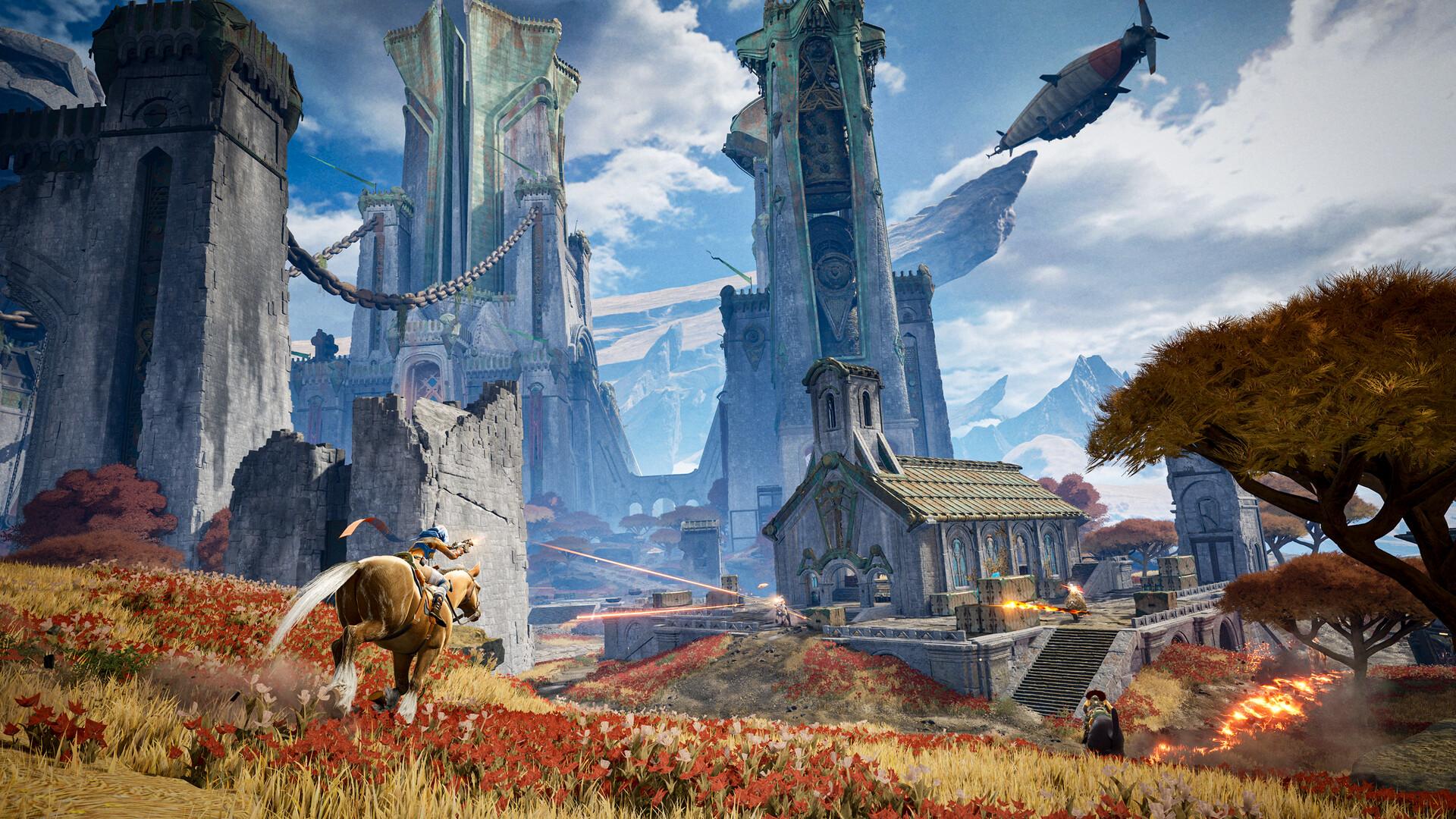
Though also important beforehand, phase two highlights the utility of mounts across these expansive maps. There’s tension for both teams since a successful Shieldbreaker plant also damages base health. It’s relatively simple to keep track of the carrier – the in-game and in-map visual cues are similar to World of Warcraft’s PVP – but it’s important to note they’re not disarmed while holding it. Alongside shield and helms, improving your mount – whether wolf, horse, gryphon, etc. – with a better saddle could be the deciding factor in a successful plant. Since most potential flag spawn points play with elevation, there’s an implicit danger to entrenched fighting in the mid-section. Should neither team plant in time, respawns – though not revives – become locked; if either team still doesn’t budge, then whichever base is closest to the Shieldbreaker gets raided (though doesn’t lose any base health).
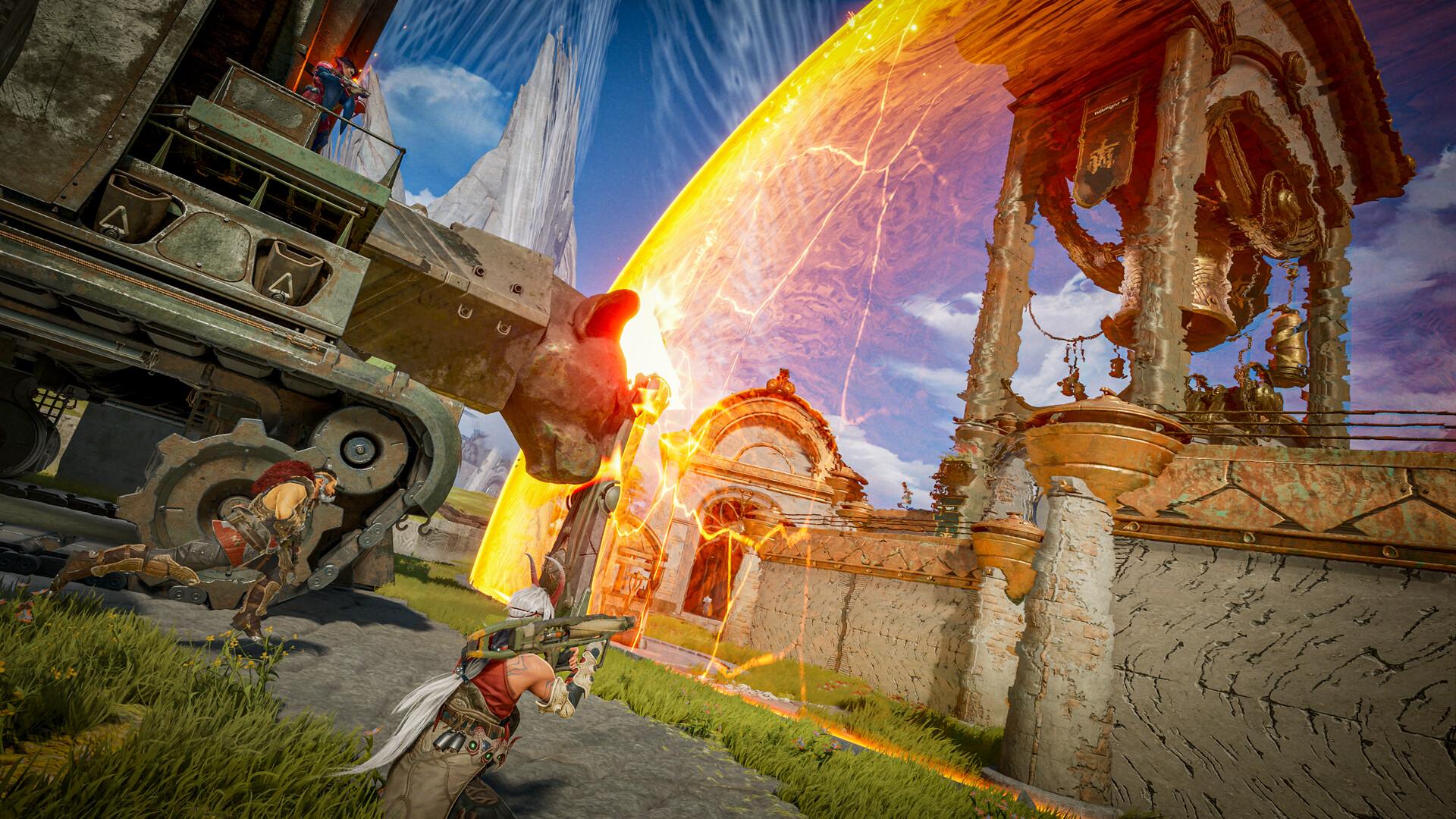
Finally, all of the foraging, fighting, and flag-delivering culminates in a climactic raid on a stronghold. Whether attacking or defending, one can’t help but appreciate the awesome sight of a massive, mechanized siege tower slowly exiting an… otherworldly veil to bash the hell out of a magical shield. Presentation is everything: the battering ram’s successive hits continually cracking the shield like damaged glass, combined with Cris Velasco’s sweeping score and attackers’ taunting voice lines, all reach a momentous crescendo after the third smack breaches. The hard part has just begun, especially against stronger defenses. From here it’s like a fantasy-themed Rainbow Six: Siege with its bomb-planting and destruction physics for walls and ceiling hatches. With limited respawns and extended countdown timers – 40 seconds for Generators and 80 seconds for Anchor Stone – it’s crucial to strategically suss out weak points. Failure to destroy any of the three nets the attacker’s base the damage equivalent of a wrecked generator.
From the outset, it’s easy to see both excitement and potential pitfalls for Highguard’s triptych of personalities; the “jack of all trades, master of none” adage springs to mind. It’s certainly not the best at on-boarding players. While liberally borrowing Apex’s nouns and verbs, there’s something alien about a typical shooter emphasizing gear levels alongside gun skill; having the drop on someone is often irrelevant with grey weapons against quick reflexes and an epic (purple) shield, for example. Though similarly true for many Battle Royales, their inherent randomness enables more creative opportunities than just retreating for better gear. There’s no chance for those rare emergent moments of using a killed enemy’s kit against one of their remaining companions, given no one drops anything; instead, all that’s left upon anyone’s death is a glowing orb to either destroy or revive – which can create tense make-or-break gambles.
The ways in which Wildlight strips and adds from other familiar templates can be paradoxically exciting and frustrating. Practically every map is too big for 3v3 matches, especially with long respawn countdowns, but that distance and time also punctuates the importance of smart decisions. With so few companions to rely on and no socially Darwinistic XP or killstreak distractions, there’s a greater impulse towards comradery. Though its (unranked) 5v5 mode hits closer to an appealing sweet spot, the lower 3v3 (ranked and otherwise) still makes sense when considering fairness and plausibility of soloing a full team during overtime. Your only lost item from dying is your current shield – which is easily replaced by other ones that are automatically stored like spare t-shirts – so as to avoid repetitively relying on RNG.
For brevity’s sake, bullet points feel necessary here:
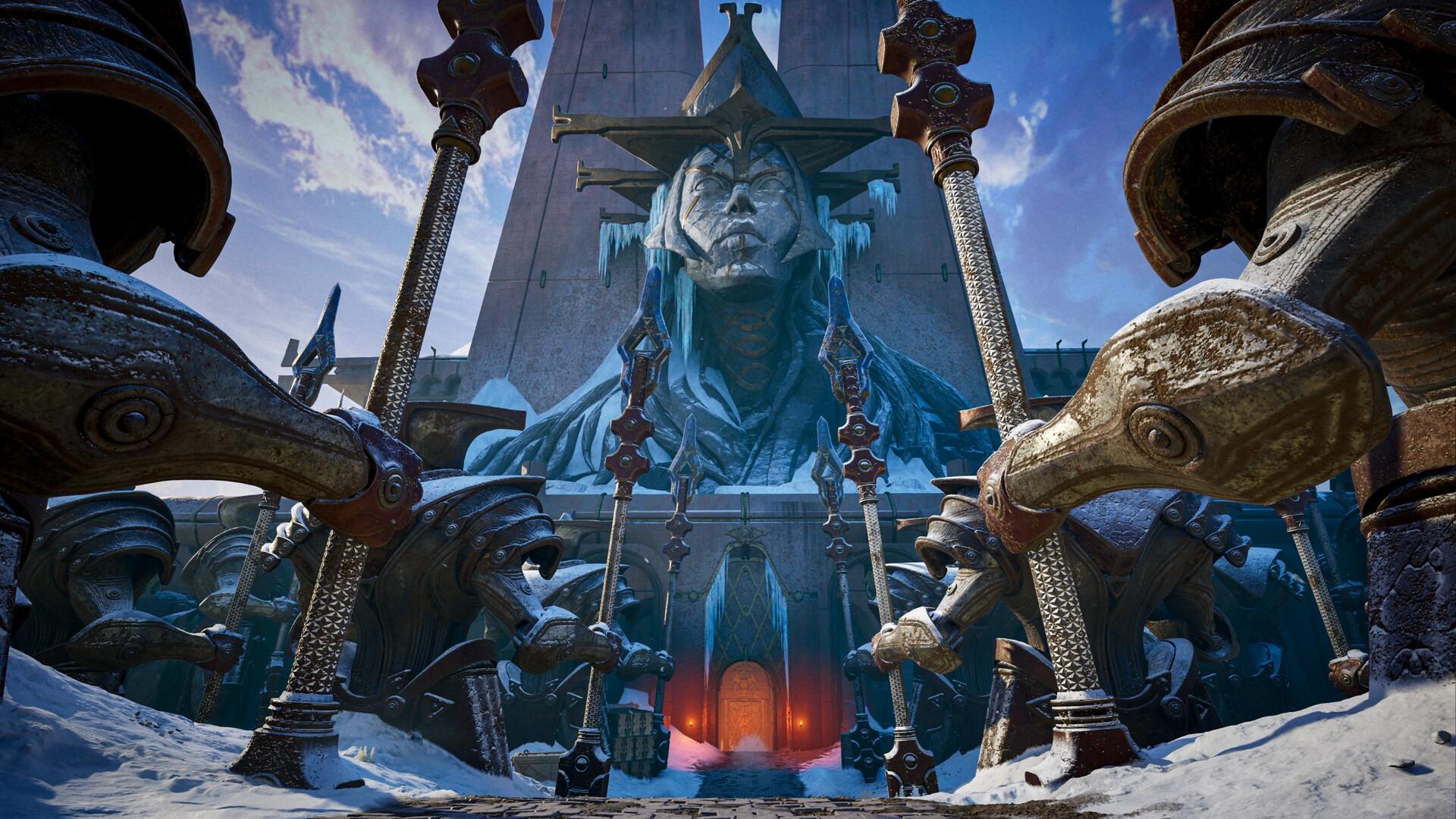
- Though the broader map is pre-selected, giving teams one of four choices for home base is a nice touch. Each base variant has a unique visual theme along with different tactical advantages and disadvantages.
- While launching with a slim weapon roster, it’s no surprise the kinesthetics of shooting feel satisfying.
- The additional layer of a “Domesplitter” enabling raiders to create an alternative access point besides the siege tower is another fascinating gamble for both sides.
- The recent additions of an RPG-esque Skill Tree with four distinct categories: Raider (Attack), Harvester, Treasure Hunter, & Protector (Defense). A bit strange how the total amount of awarded skill points enables you to nearly max out two branches though.
- Its art design isn’t revolutionary by any means, but the standard arsenal congeals with the high-fantasy trappings without sacrificing visual clarity.
Even with the broader critiques, these details (among others) show a genuine interest for finding wrinkles in the most expected shooter routines.
Also emulating Apex, another exorbitant item shop is here! Well, in the grand scheme of free-to-play shooters, it’s not the most egregious example. The typical options of $5-$100 blocks are here, and were certainly quite tempting given the variety of both character and mount customizations, but at least the trading post and free battle passes provided some great cosmetic options and weren’t insanely expensive. Even the paid battle pass was relatively modest (~$9), with some of the best skins for certain heroes. Locking certain mounts (gryphon, demonic hound, owlbear hybrid) and their cosmetic options behind premium currency is far more blatant though.
Whether a more cautionary tale about relying on future plans, Hero shooters in today’s market, or suspicious advertising, Highguard nevertheless earns some appreciation. It’s not often a shooter feverishly pastiches so many other personalities and comes out cementing its own. The drawback in Wildlight’s case, though, is how said identity conflicts with player engagement, as though the fervor of exploring minute details distracted from grander structural concerns. But even with those criticisms and a roadmap now left unrealized in mind, what’s left is still a rewarding shooter that knows how to make you say “just one more game… just one more game.”
Contractor by trade and writer by hobby, Lee’s obnoxious criticisms have found a way to be featured across several gaming sites: N4G, VGChartz, Gaming Nexus, DarkStation, TechRaptor, and Cubed3! He started gaming in the mid-90s and has had the privilege in playing many games across a plethora of platforms. Reader warning: each click given to his articles only helps to inflate his Texas-sized ego. Proceed with caution.
Full Article – https://www.vgchartz.com/article/467255/highguard-xs/
